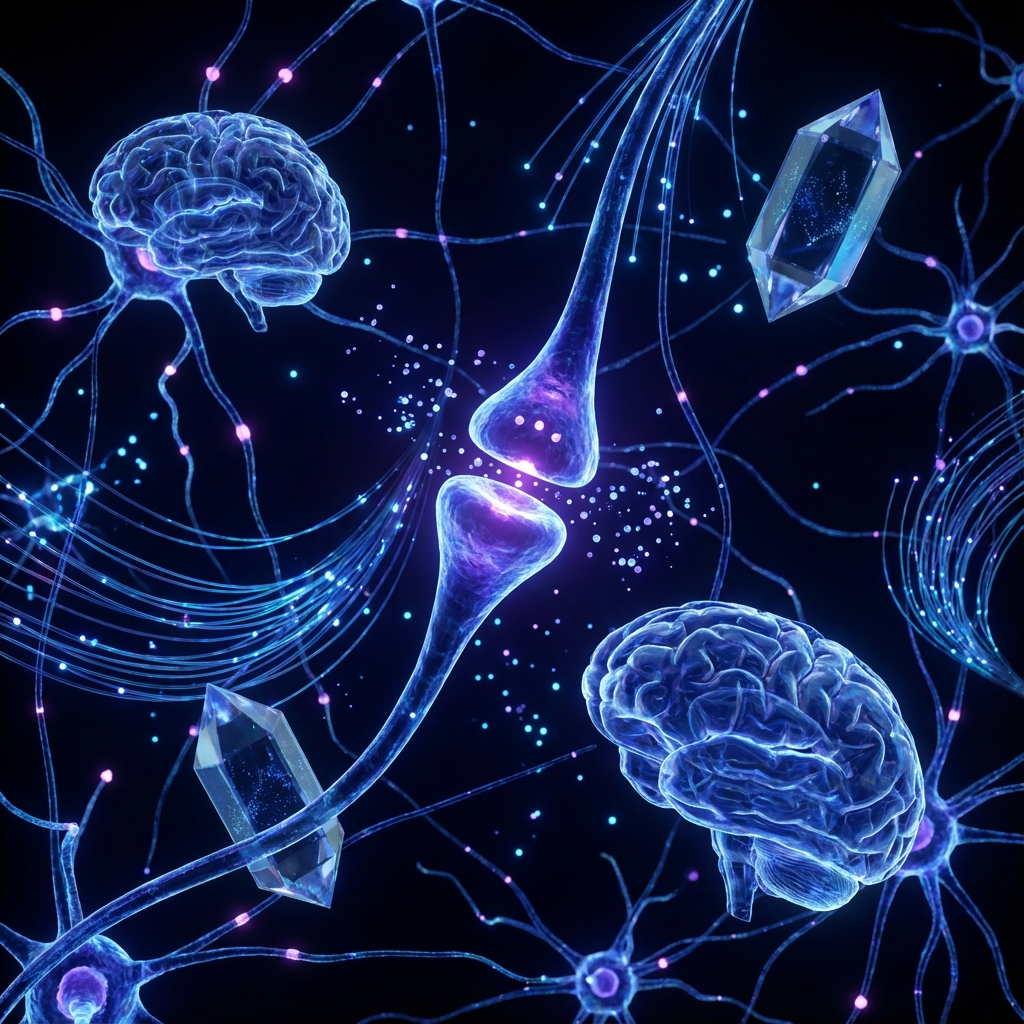
Your brain wasn't built for internet porn.
That's not a moral judgment—it's a biological fact. The human brain evolved over millions of years, shaped by an environment where highly stimulating sexual content didn't exist. Then, in the span of two decades, high-speed internet delivered unlimited novelty directly to our dopamine systems.
What happens when ancient hardware meets modern stimuli? Let's look at what neuroscience actually tells us.
The Dopamine System: A Quick Primer
To understand porn's effects, you need to understand dopamine. Contrary to popular belief, dopamine isn't the "pleasure chemical." It's the wanting chemical—the anticipation chemical.
Dopamine surges when you expect a reward, not when you receive it. That spike you feel scrolling through thumbnails, clicking from video to video? That's dopamine driving the search, not the satisfaction.
Neuroscientist Dr. Robert Sapolsky calls this the "magic of maybe"—uncertainty about rewards triggers more dopamine than guaranteed ones. Each click might lead to something better. Sound familiar?
The Coolidge Effect: Wired for Novelty
In the 1950s, researchers noticed something interesting: male rats would mate with a female until exhausted, showing no further interest. But introduce a new female? Suddenly energized again.
This became known as the Coolidge Effect (named after a somewhat embarrassing anecdote about President Calvin Coolidge). It's been observed across species, including humans, and it's driven by dopamine.
Here's the problem: internet porn offers infinite novelty. Every click potentially delivers a "new partner." Your brain's novelty-seeking circuit never gets satiated—it just keeps firing.
Dr. Gary Wilson, in his book Your Brain on Porn, explains that this wasn't an issue with earlier forms of porn (magazines, DVDs). You'd see the same images repeatedly; novelty wore off. High-speed streaming changed that equation entirely.
What Brain Scans Actually Show
This isn't just theory. We have imaging studies.
Reduced Gray Matter
A 2014 study in JAMA Psychiatry scanned the brains of 64 men and found that those who watched more porn had reduced gray matter in the striatum—a region involved in reward processing. More hours of porn use correlated with less brain volume in this area.
The researchers noted this could indicate either that porn shrinks the brain or that people with smaller striatal volumes seek more stimulation. But either way, the correlation is concerning.
Altered Reward Response
Cambridge University researchers studied men with compulsive sexual behavior versus healthy controls. When shown sexual images, the compulsive group showed hyperactivation in reward regions—similar to what you'd see in substance addiction.
But when shown non-sexual rewards? Reduced activation. Their reward systems had become desensitized to normal stimuli while over-responsive to sexual cues.
Changed Connectivity
Research has also found altered connectivity between the prefrontal cortex (responsible for decision-making and impulse control) and the reward system in heavy porn users. The implications: reduced ability to override impulses.
Tolerance and Escalation
One of the hallmark signs of addiction is tolerance—needing more to get the same effect.
In , this often manifests as:
- Needing longer sessions
- Requiring more explicit material
- Seeking novel categories (some disturbing)
- Real-world sex feeling insufficient
A 2016 study found that "ichome frequency of pornography use was correlated with preference for sexually explicit material depicting violence and illegal activities." This doesn't mean everyone escalates to extreme content, but the pattern is well-documented.
The mechanism is straightforward: when receptors are constantly flooded with dopamine, they downregulate (become less sensitive). You need more stimulation to achieve the same response. This is tolerance at the receptor level.
Sensitization: The Other Side
While the reward system desensitizes to normal pleasures, it simultaneously sensitizes to porn-related cues.
This means:
- A glimpse of something triggering causes immediate arousal
- Thoughts drift to porn with minimal provocation
- Cues that wouldn't have registered before now grab attention
- The pathway from cue to craving becomes automatic
This sensitization is why people can go weeks without thinking about porn, then see a single trigger and suddenly crave it intensely. The neural pathway has been reinforced thousands of times—it activates quickly and powerfully.
The Prefrontal Cortex Impact
Your prefrontal cortex is like your brain's CEO—it handles decision-making, impulse control, and long-term planning. It's what makes you you rather than just a bundle of impulses.
Research shows this region is affected by addiction:
Hypofrontality: Reduced activity and volume in the prefrontal cortex. Heavy porn users show this pattern, similar to substance addicts. The CEO is essentially weakened.
Impaired executive function: Studies using neuropsychological tests find that people with compulsive sexual behavior perform worse on tasks requiring impulse control and decision-making.
This creates a vicious cycle: weakened prefrontal cortex → reduced impulse control → more porn use → further weakening.
Mirror Neurons and Sexual Conditioning
Here's something less discussed: porn may condition sexual response through mirror neurons—brain cells that fire both when you perform an action and when you watch someone else perform it.
Normally, this helps us learn through observation. But with porn, you're training your sexual response to firing while watching others, not while engaging with a partner.
Some researchers theorize this contributes to porn-induced erectile dysfunction (). The brain has been conditioned to arousal while watching, not while participating. When you're with a real person, the expected arousal pattern doesn't match.
The Withdrawal Experience
When heavy users quit, withdrawal symptoms are common:
- Intense cravings
- Anxiety and irritability
- Depression (sometimes severe)
- Insomnia
- Inability to concentrate
- Flu-like physical symptoms (some report)
These typically peak around days 7-14 and gradually improve over weeks to months.
Why does this happen? The brain has adapted to constant dopamine stimulation. Remove it abruptly, and there's a deficit. The receptors need time to upregulate (become more sensitive again). The neural pathways need to weaken through disuse.
Neuroplasticity: The Good News
Here's where it gets hopeful: your brain can change back.
The same neuroplasticity that created the problem can reverse it. Neural pathways that aren't used grow weaker—a principle called "use it or lose it." Meanwhile, healthy behaviors can be strengthened.
Research on addiction recovery shows:
- Gray matter can increase with abstinence
- Prefrontal cortex function improves
- Normal reward sensitivity returns
- Cravings diminish over time
A 2019 study in NeuroImage: Clinical found that after extended abstinence, people with gaming addiction showed normalized brain connectivity patterns. Similar effects are expected with porn recovery.
The Timeline of Brain Recovery
Based on research and clinical observation:
Days 1-14: Acute withdrawal. Dopamine levels are low, receptors haven't adjusted. This is typically the hardest period. Brain fog, irritability, and intense cravings are common.
Weeks 3-8: Initial recovery. Many people report improved clarity, better mood, and reduced cravings. Receptors are beginning to normalize.
Months 2-6: Deeper recovery. Sexual response to real partners often improves during this period. The "flatline" (temporary loss of libido) that many experience usually resolves.
Beyond 6 months: Continued improvement, though some report lingering effects for 1-2 years after heavy long-term use. The brain is adaptable but not infinitely fast.
Important caveat: these timelines vary significantly based on intensity and duration of use, individual brain chemistry, and what other recovery activities you're engaging in.
Accelerating Recovery
Abstinence alone helps, but you can support the process:
Exercise
Physical exercise increases BDNF (brain-derived neurotrophic factor), which supports neuroplasticity. It also releases dopamine through healthy pathways. Some studies suggest exercise accelerates addiction recovery.
Sleep
Sleep is when the brain consolidates learning and clears waste products. Poor sleep impairs recovery. Prioritize 7-9 hours.
Social Connection
In-person social interaction releases oxytocin and stimulates reward pathways naturally. Isolation feeds the problem; connection heals it.
Novelty Through Healthy Means
Your brain craves novelty—that's not going away. Channel it toward healthy activities: new skills, travel, creative projects, varied exercise routines.
Breathing Techniques
This might seem too simple, but it matters. Techniques like the 5-20-5 method activate the parasympathetic nervous system, which can interrupt the craving-action cycle.
When an urge hits, your sympathetic system fires (fight-or-flight). The breath hold creates a CO2 buildup that triggers parasympathetic activation—essentially hitting the brakes on the urge. It's not just distraction; it's physiological intervention.
Apps like Halto make this technique accessible in the moment—which is when you need it most.
What This Means For You
If you're reading this as a heavy user, you might be alarmed. Brain changes sound scary.
Here's the perspective: your brain has adapted to circumstances. Those adaptations made sense from a survival standpoint—your brain found a reliable reward source and optimized for it. It's doing what brains do.
The same adaptation capacity means it can re-adapt. You're not permanently damaged. You're temporarily reconfigured.
Recovery is essentially:
- Removing the superstimulus
- Allowing receptors to normalize
- Building new neural pathways through healthier behaviors
- Weakening the old pathways through disuse
- Rebuilding prefrontal cortex function through practice
This isn't quick, but it's reliable. Countless people have gone through this process and come out with healthier brains and better lives.
Key Takeaways
- Porn hijacks dopamine systems designed for survival, not infinite novelty
- Brain scans show measurable changes in reward, executive function, and connectivity regions
- Tolerance develops, requiring escalation for the same effect
- Sensitization occurs simultaneously—cues trigger stronger responses
- Prefrontal cortex function decreases, impairing impulse control
- Neuroplasticity means recovery is possible—brains can and do normalize
- Recovery takes time—expect months, not weeks
- Active strategies help—exercise, sleep, social connection, and breathing techniques accelerate the process
Your brain got you into this; your brain can get you out. It just needs the right conditions and enough time.
Support your recovery with science-based tools. [Try Halto's technique](/demo) to interrupt urges at the neurological level.